Burnout Packed a Suitcase Too: Why 'Paradise Guilt' Is the Silent Productivity Killer

Photo: Rengganis Prajnaparamita, CC BY-SA 4.0, via Wikimedia Commons
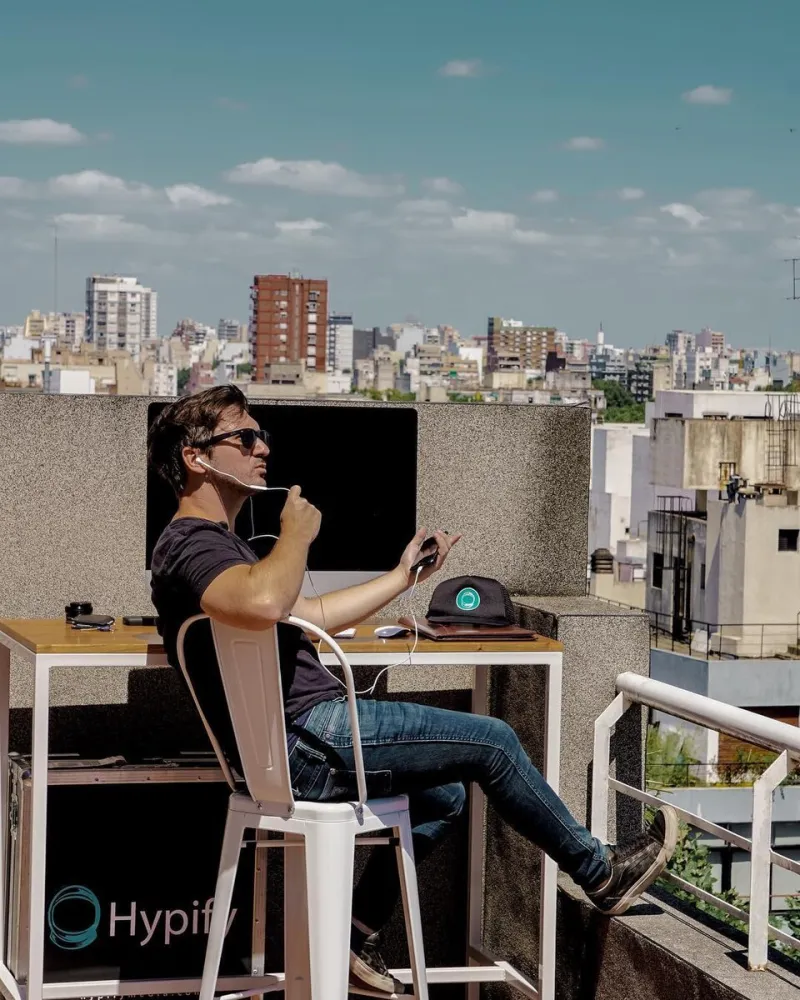
Somewhere around week three of my stay at Nomad Resort X, I woke up with a fever, a sore throat, and a decision to make. My laptop sat on the desk, the resort's pool shimmered outside the window, and my brain — trained by a decade of US hustle culture — did the math: I'm already in paradise. How sick can I really be?
So I worked. Half-heartedly, through chills, from a lounger I'd dragged into the shade. And you know what happened? I got sicker, my deliverables got sloppier, and I spent the following week resenting a beach I'd paid good money to sit on.
If you've ever powered through a migraine because "technically I'm on a beach," this one's for you.
Paradise Guilt Is Real, and It's Expensive
Here's the paradox nobody warns you about: workations can make rest harder, not easier. When your Tuesday afternoon looks like a vacation brochure, your brain files every non-working hour as leisure. Asking for a full day off feels like double-dipping — like you're somehow cheating your clients by resting in a place they already envy.
This is what I've started calling paradise guilt, and it's a uniquely workation-shaped problem. Back in a Chicago office, a sick day is a sick day. On a workation, every boundary you set has a palm tree in the background, which makes it feel less legitimate.
But burnout doesn't check your GPS. It follows you through TSA, unpacks its bag in your villa, and waits for you to skip one too many nights of sleep chasing a time zone that's seven hours ahead of your body.
The Rest Audit: Naming What Actually Recharges You
The fix starts with an uncomfortable admission: not all downtime is created equal. During a long stay, most of us blur our days into a mush of half-work, half-leisure that fully delivers neither.
Try sorting your non-working hours into three buckets:
- Background rest — the hammock reading, the podcast on a walk. Pleasant, but passive. Your brain is still idling in the on-position.
- Adventure rest — the snorkeling trip, the scooter ride to the next town. Restorative, but energizing in a way that still draws on your tank.
- Deep rest — the genuinely unproductive day. No sightseeing, no side hustle, no guilt. Sleep in, eat something good, do absolutely nothing that would look good on Instagram.
Most nomads I've met are drowning in the first two and starving for the third. But deep rest is the only bucket that actually refills the tank — and it's the one paradise guilt convinces you to skip.
Build a Real Rest Day Into the Calendar
Here's my rule after a year of long stays: one full deep-rest day per week, scheduled like a client meeting. Not a "maybe if the deadline allows" day. A blocked, protected, non-negotiable day.
A few things that make it stick:
- Pick a consistent day (I use Sundays US time, which conveniently lands mid-week in most Asian and European time zones — your clients won't even notice).
- Define it in advance. Mine looks like: no laptop open before noon, one long meal, a nap, and zero obligations. Yours might look different. The point is that it's defined.
- Pre-write your out-of-office. Set the autoresponder the night before so the day doesn't start with triage.
- Tell one person at the resort. Accountability works even in paradise. My neighbor Elena and I check in on our rest days like it's a gym buddy system — except the workout is doing nothing.
If you're on a 30-day stay, that's four full recharge days. I promise you'll close your quarter stronger than the version of you who worked 26 straight days in the sun.
The Client Conversation: Scripts for the US Time Zone Problem
The hardest part for most American nomads isn't taking the day — it's communicating it without the spiral of over-apologizing. A few scripts that have worked for me:
The standing schedule email (send before your trip):
"Quick heads-up on my schedule while I'm abroad: I'll be online 6 AM–2 PM Eastern, Monday through Friday. I've built in buffer time for handoffs, so anything urgent sent by 1 PM ET gets same-day attention."
Notice what this does: it frames your availability as a system, not a favor. Clients respect systems.
The rest day mention (casual, no justification):
"I keep Fridays offline to recharge — it's how I stay sharp the rest of the week. Anything that comes in Friday will get my full attention Monday morning."
No apology. No beach photo attached. Just a boundary stated like it was never in question.
The sick day (yes, you still get one):
"Not feeling well today — stepping away to recover so I'm back at full speed tomorrow. [Name] has context if anything's urgent."
Notice you don't owe anyone the word "sick" with a footnote about how you're technically in paradise. You're a professional who is unwell. Full stop.
Rest Is Part of the Package, Not a Perk
Here's the opinion part of this opinion piece: if you're booking a month at a place like Nomad Resort X and never taking a true day off, you didn't book a workation. You booked a prettier cubicle with better weather.
The whole pitch of working from the coast is sustainability — the idea that you can do your best work and keep your tank full for years, not quarters. That only works if rest is structural, not something you earn by finishing your to-do list (spoiler: the list regenerates).
So block the day. Send the email. Take the nap with the same conviction you bring to a client deadline. Your work will be better for it — and honestly, so will your tan.
The fever I powered through in week three cost me five days of productivity. The rest days I've protected since have given me back a hundred. Do the math.