Pack the Pills, Know the Clinic: A US Nomad's Health Playbook for the Long Stay
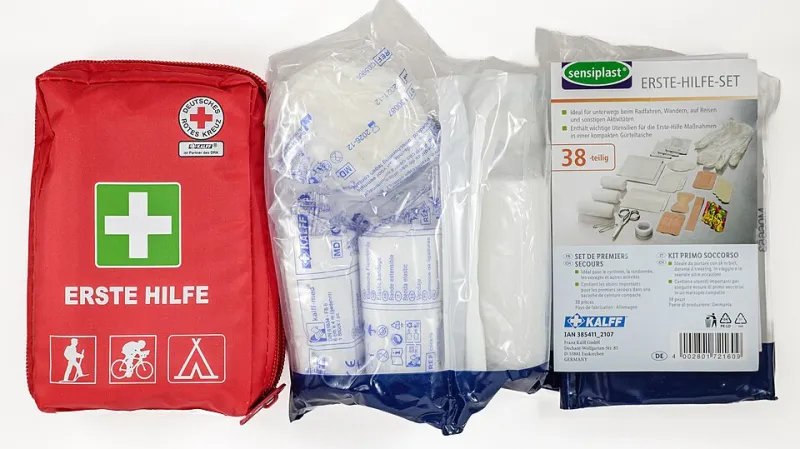
Photo: Friedrich Haag, CC BY-SA 4.0, via Wikimedia Commons
Nobody plans a workation around the possibility of a sinus infection. But the people who have the calmest month abroad are almost always the ones who spent forty-five minutes thinking about it before they left.
This is that forty-five minutes, written down. It's a checklist, not a diagnosis. Nothing here is medical advice — your doctor and your insurer know your situation and we don't. What we can do is tell you what tends to go sideways, and how to get ahead of it.
Start with the prescription audit
Open your medicine cabinet and write down everything you take, including the things you'd forget to mention.
Then count days. A 90-day stay needs a supply that outlasts the trip with a cushion, which means refilling before the refill date and probably asking for a vacation override. Most US plans allow that; the request usually needs a few business days, so start three weeks out, not three days.
Two details that save real headaches:
- Ask your pharmacist for generic drug names. Your American brand name may not exist at a pharmacy near the resort, but the molecule does.
- Keep everything in its original labeled container, with a copy of the prescription and a short letter from your prescriber on letterhead. Some countries are strict about certain classes of medication — stimulants and anything opioid-adjacent especially — and documentation turns a tense conversation into a boring one.
If you take something refrigerated or injectable, ask your doctor what a realistic travel plan looks like. That's a conversation for them, not for a resort blog.
The insurance page everyone skims
Travel medical coverage is one of those products people buy for the flight and never read. Read this part first: the emergency evacuation limit.
A policy with a generous doctor-visit benefit and a thin evacuation limit is shaped wrong for a long stay. Evacuation and repatriation are the situations where coverage actually matters, because those are the bills that don't stay small. Compare the evacuation number before you compare the daily perks.
Then check three more things:
- Pre-existing conditions. What's the lookback period, and does your stable condition count?
- What your US health plan already covers abroad. Many plans offer limited or emergency-only international coverage — and Medicare generally does not cover care outside the United States. Confirm, don't assume.
- How claims actually work. Do you pay upfront and get reimbursed? Keep every receipt, every prescription slip, every discharge summary. Photograph them the same day, because paper disappears.
Your credit card's travel coverage is usually a thin layer on top of something, not the something itself. Check whether it's primary or secondary before you rely on it.
Finding a doctor who speaks your language
Do this in your first 48 hours at the resort, while you're healthy and it's a five-minute errand. Not at 2 a.m. with a fever.
Ask the front desk for the resort's list of nearby clinics and English-speaking physicians, and note two things: which ones are open on weekends, and which take direct insurance billing versus cash. Save the numbers in your phone right next to your pharmacy and your embassy contact.
Many clinics near long-stay resorts handle international visitors routinely and are entirely straightforward. A short video consult with your US doctor can also be useful for minor questions, provided your plan covers it and your provider is licensed to advise you where you are — one more thing to confirm before you go.
What the front desk can and cannot do
Our team is genuinely good at this, and it helps to know the boundary in advance.
We can: call a doctor or clinic on your behalf, arrange a car to get you there, keep a copy of your insurance details in your guest file, send soup up, adjust housekeeping so you can sleep, and help you scan and email paperwork.
We cannot: give medical advice, recommend a medication, dispense anything from a first-aid kit beyond basic supplies, interpret your policy, or guarantee that a specific clinic will bill your insurer directly. That's a boundary worth respecting — for everyone's sake.
The ten-item pre-flight list
- Prescriptions refilled, in original containers, with paper copies
- Prescriber letter for anything controlled or injectable
- A small kit: pain reliever, antihistamine, rehydration packets, blister care, sunscreen, insect repellent
- Insurance card and policy number saved offline in your phone
- Evacuation limit confirmed, in writing
- Clinic and pharmacy names near the resort, saved in your contacts
- A digital copy of your vaccination record
- Embassy or consulate contact for your destination
- A note of any allergies, in the local language if you can manage it
- One person back home who knows your itinerary
If something does go sideways
Handle the health first, the paperwork second, and the work third. Message your manager with a short, factual note — the resort can help you draft it if you're foggy — and ask for the day. Most remote teams are far more reasonable about this than people expect, especially when the alternative is a half-present employee on a bad connection.
Then photograph every document before you leave the clinic. Future-you, filing a claim three weeks later, will be grateful.
The calm version
Almost nobody's month abroad involves a dramatic medical story. It usually involves a head cold, a sprained ankle from a beach run, or a prescription that ran out two days early. All three are annoying. None of them are emergencies — provided you did the boring twenty minutes of prep before you got on the plane.
Do the twenty minutes. Then go enjoy the water.